An upcoming course at UGA, an all-new undergraduate course where technology meets humanity.
A guided exploration of Conversational AI – a ubiquitous family of technologies in 2026 – through a fresh new lens that puts the human, not the machine, front and centre.


Conversational AI is transforming our lives. But human-machine partnerships remain filled with friction and fraught with danger.
Large language models have revolutionized conversational AI. Chatbots produce more fluent output than ever. But a giant model trained on the written texts on the Internet, fine-tuned by well-designed dialogues, still misses nuances of everyday ordinary communication. LING 2150 explores these issues that inescapably surround us in the contemporary era.
Technology
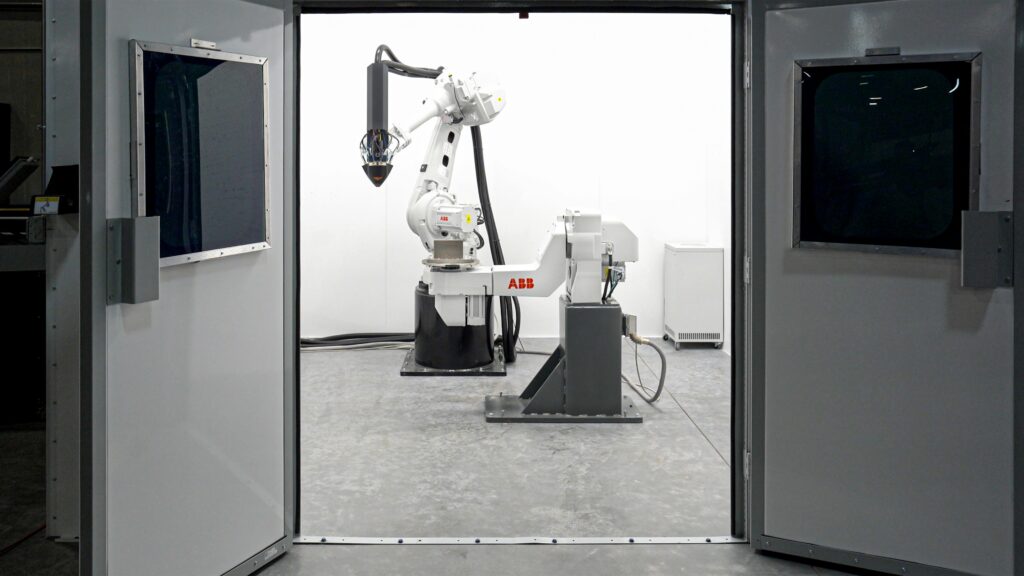
Explore the landscape of contemporary conversational AI, from customer service chatbots to AI characters in virtual reality. Trace the providence of this tech from architecture and training to evaluation and deployment. Use the critical eye of interdisciplinary humanities and social sciences to uncover both its successes and its limitations.

Conversation
Conversational interaction is where the spheres of human experience and knowledge – language, culture, cognition, sociality – come together. Many argue that such interactions constitute the origin of language, culture, cognition, sociality, and even the self. LING 2150 guides you through the essential practices that constitute conversation – and AI’s capacity to mimic them.
Language
Human communication lies as much in our words as in the unspoken. Much more than a tool for relaying messages, it plays a central role in constructing identities and relationships. How do chatbots understand implicit meaning and respond accordingly?


Mind
The human mind is designed to interact with other minds. How do they confront a material artefact that appears to constitute another mind? How do we extend the flexibility and ingenuity of socially grounded cognition to our interactions with technology?
Society
Conversational AI, like all technologies, are socially embedded. How do prevailing discourses trickle into the development of conversational technology? What are the social and scientific discourses that shaped the industry’s current developmental trajectory? And how does this shape everyday interactions with these quasisocial tools?

Play
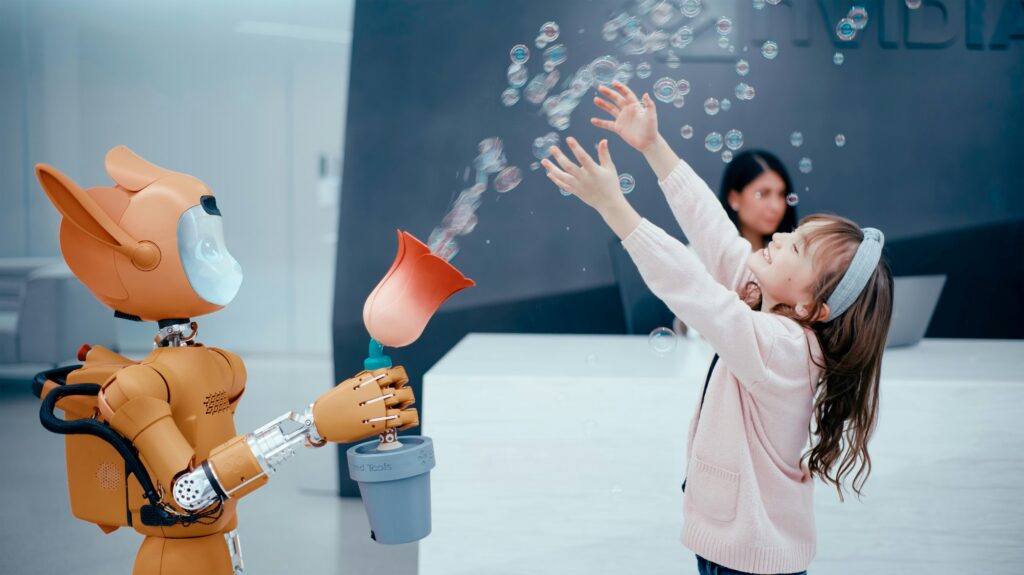
LING 2150 is far from a traditional classroom. Abstract knowledge is only a small part of the course. Have fun, explore, make mistakes – it is all part of the reflexive process of creating knowledge.
About Ryan
I am assistant professor of in the Linguistics department. My teaching focuses on computational linguistics, corpus linguistics, and discourse analysis, which means I look at how people use language in daily-life situations using large bodies of textual data. You can find my personal website here, with links to my other work.
FAQs
Do I need prior background in anything?
LING 2150 is open to all. It is designed to be relevant to students of all (intended) majors, and with all sorts of career aspirations. We believe that regardless of your background and interests, the course will be highly relevant to you. Humanities and social science majors will have the chance to examine the humanistic and social underpinnings of technology. STEM and business majors will explore new critical perspectives on science and technological work. And all students will learn more about a technology increasingly embedded in daily life and in all industries.
What if I want a taste of what will be in the course?
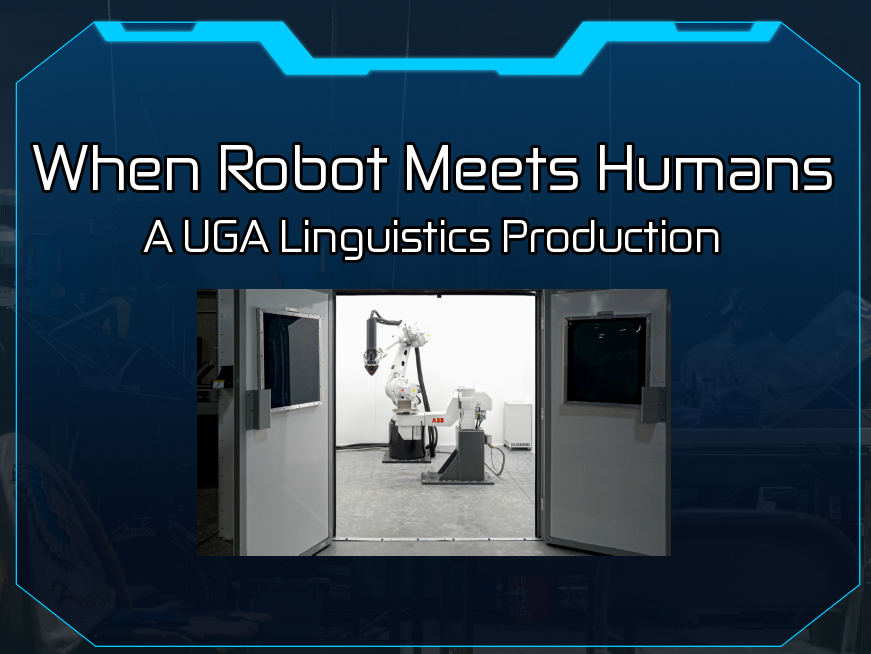
Play the introductory video game, When Robot Meets Humans!
The syllabus is also available on the UGA syllabus system.
Do I need to be a good writer to succeed in this course?
As a humanities course, there will be short-form writings throughout the semester. However, they will not be time-consuming, and you will be given ample opportunity to express your insight and creativity in other ways too.
When is the course offered?
Every fall, with a current cap of 30 students.
Credits
Artists on Unsplash